
There's a time when a property owner or manager has to make a difficult decision — a unit has failed for the third or fourth time in eighteen months, the current repair estimate is reasonable on its own, and the question on the table is whether to authorize the fifth repair, or to treat this failure as the signal to replace the unit instead. The difficulty comes from a vague memory of the past repairs. It depends on information that a single repair estimate doesn't provide.
The instinct that wins is to authorize the repair, because it is the cheaper option. What that comparison leaves out is everything the repair estimate doesn't capture: whether this failure is independent or connected to the previous three repairs, whether the unit's other major components are showing similar stress, and what the realistic remaining life is once this repair is made.
The more useful frame isn't "repair cost versus replacement cost" — it's "cost per remaining year of service." A modest repair on a unit with a realistic five years of remaining life is a small annual cost. The same repair on a unit that's failed three times in eighteen months and shows no sign of the pattern stopping might realistically buy six to twelve months before the next failure — which makes it a materially worse deal. It is also one that's likely to repeat and cause further expenses.
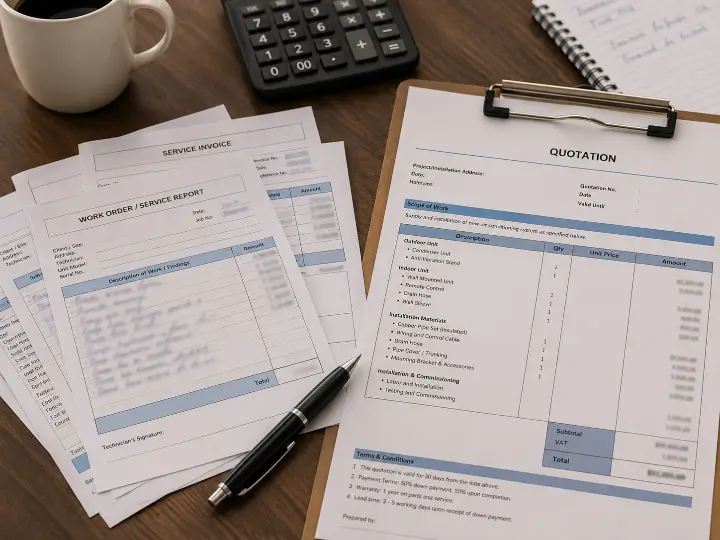
Look past the current repair to the pattern behind it. Are the failures connected — a capacitor failing, then a contactor, then a fan motor, in a sequence consistent with an underlying electrical or refrigerant issue that's stressing every component? Or are they unrelated, ordinary wear-and-tear failures that happen to be clustering by coincidence?
The first pattern is a strong signal for a measurement-led approach: an underlying condition that's damaging one component will keep damaging the next one, and the fourth repair is rarely the last.
This is where a maintained record of readings — refrigerant charge, amperage draw, static pressure — earns its cost back. Without that simple, basic, regular data history, everyone is blind. With it, the decision becomes a pattern-recognition exercise.