
Every wired aircon unit has a ground wire bonding the cabinet, the compressor housing, and the motor frames back to a common ground point. Under normal operation, no current flows through it. Its entire job is to give a fault current somewhere safe to go if insulation fails somewhere else in the unit.
That makes it the one connection in the panel with no everyday symptom to flag when it's degrading.
Ground lugs corrode eventually because they are exposed to rain, humidity, and temperature swings. A ground connection can go from tight and clean to loose and oxidized over several seasons without affecting how the unit runs day to day, because it isn't doing anything day to day.
When it is needed, the danger surfaces. If a motor winding shorts to its frame, or a wire chafes through and contacts the cabinet, a solid ground connection trips the breaker immediately and safely. Meanwhile, a degraded ground connection has enough resistance that the cabinet itself can become energized — a shock hazard to anyone who touches the unit.
There's no gauge reading that flags this ahead of time, because there's no current flowing to measure under normal conditions. The check is visual and tactile:
- confirming the ground lug is tight,
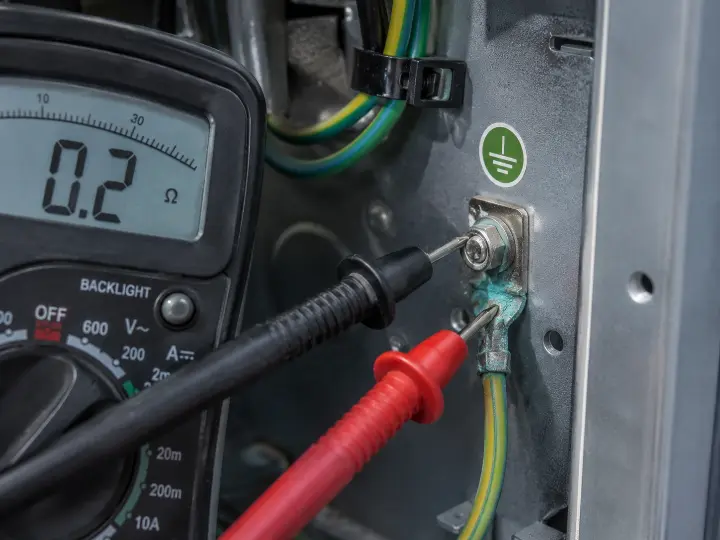
- checking for corrosion or green oxidation on the bonding wire and its connection points,
- verifying continuity with a multimeter rather than assuming it because the wire is physically present and looks connected.
It is the easiest check to justify skipping, because it is not in use daily. Ask your technician directly whether ground connections were checked for tightness, corrosion, and continuity this visit. It's a one-line question that most vendors have never been asked before.