
The disconnect switch, or circuit breaker, is the pull-out or lever-style box mounted near the outdoor condensing unit. It is installed so a technician or electrician can de-energize the unit safely before working on it. Unlike almost everything else carrying line voltage, it's designed to sit outside, exposed to rain, sun, and temperature swings.
Over years outdoors, that enclosure earns its wear. Gaskets harden and shrink, latches loosen, and moisture finds its way in during driving rain or through condensation cycling inside the box. Once inside, it reaches the same blade-and-clip contacts that carry full line voltage to the unit — and those contacts corrode like any other exposed metal connection, building resistance at the one important point.
A corroded or loosely fitting disconnect blade behaves like every other degrading connection in this series:
- added resistance generates heat,
- heat accelerates the corrosion,
- the cycle continues until the blade either fails to make contact reliably,
- or overheats badly enough to discolor or melt the fuse holder and blade clips
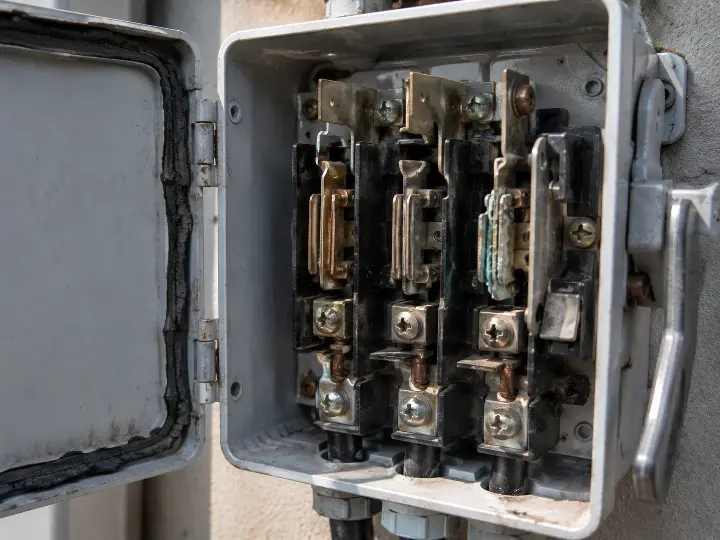
A disconnect that's difficult to pull or reinsert is often already telling you the fit has degraded.
Because the disconnect sits outside the main cabinet and is not opened during a routine filter-and-coil visit, it is easy to treat as outside the scope of a standard inspection.
It is worth checking the fuses at the same time: a fuse rated higher than the circuit calls for will mask an overheating problem instead of tripping to protect it.
Ask your technician whether the disconnect was opened and the blade contacts inspected, not just confirmed to switch on and off.