
Two technicians visit the same building. Both spend forty minutes at the unit. Both write “serviced” on the report. One just wiped down a coil. The other found a problem that would have failed the unit in a year. The report can’t tell you which happened.
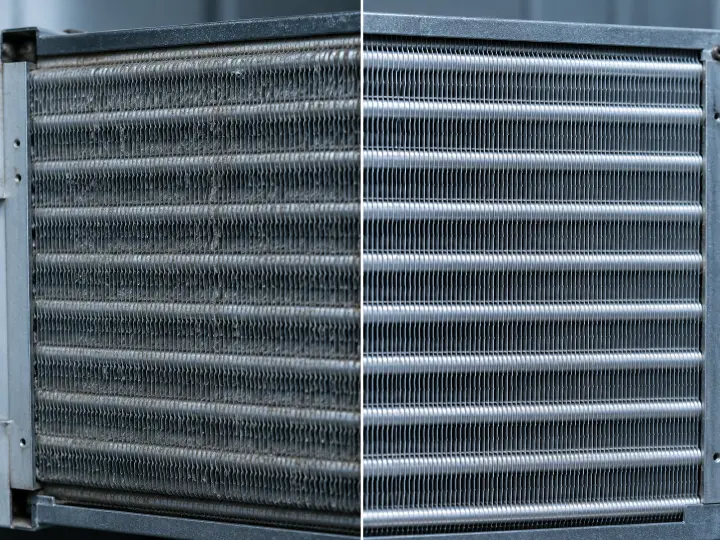
A cleaning is a task. Open the panel, rinse the coil, replace the filter, close it up. It takes skill, not judgment. A “service visit” is a diagnosis. It starts the same way, but it doesn't stop there. It asks why the filter was this dirty. Why the coil needed this much buildup removed. Whether the numbers match last visit's.
The gap shows up in what gets skipped. A cleaning-only visit skips anything without an obvious answer. A capacitor that's slightly out of tolerance gets left alone — replacing it isn't on the checklist. A refrigerant charge that's a little low gets topped off, no one checks for a leak, because finding a leak takes longer than adding refrigerant.

None of that is a failure that day. It shows up 6 to 18 months later, when the capacitor fails and takes a contactor with it. Or when 3 years of undercharged operation finally catches up with the compressor and the IPM.
The two visits leave different things behind, too. A cleaning leaves a unit that looks better. A service visit leaves a record: readings, a note on anything unusual, a flag on anything worth watching. That record is the real product. The clean coil is just proof the technician showed up.
You can tell the difference without opening the unit yourself. Besides asking what was done, ask what was discovered. “Everything's fine” is what you hear after a cleaning. “Amperage draw is up two percent from last quarter, that is worth watching” is what you hear after a service visit.
FIELD NOTE
After your next visit, ask one question: “what looked different this time?” A real service visit has an answer. A cleaning gets a shrug.