
Every wire that powers a compressor eventually lands on three small terminals pressed into the compressor's shell — the fusite. It's a glass-to-metal seal that lets electrical current pass into a sealed system without letting refrigerant out. All of the compressor's start-up and running current passes through it, making it one of the highest-stress electrical connections in the entire unit.
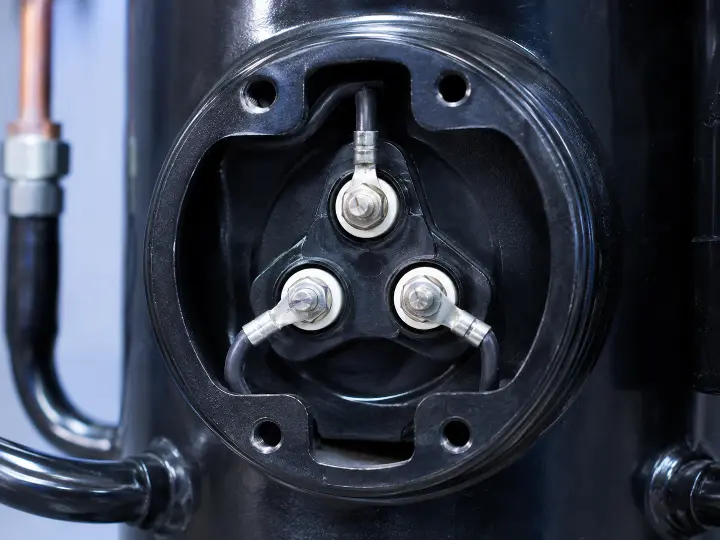
This part invites a more punishing baseline: compressor terminals run hotter than almost anything else in the unit, simply because of the amperage passing through them during every start. A connection that's even slightly loose here heats up faster and more severely than a loose connection on a contactor or disconnect.
A fusite terminal running hot doesn't just risk a bad connection — sustained overheating at the terminal can degrade the glass seal itself. Insurance adjusters and compressor manufacturers both recognize "terminal burn" as a common failure.
The visual signs are unmistakable once you know to look: a lug or terminal with heavy discoloration, a melted or deformed wire boot, or a terminal cover with scorch marks inside it.
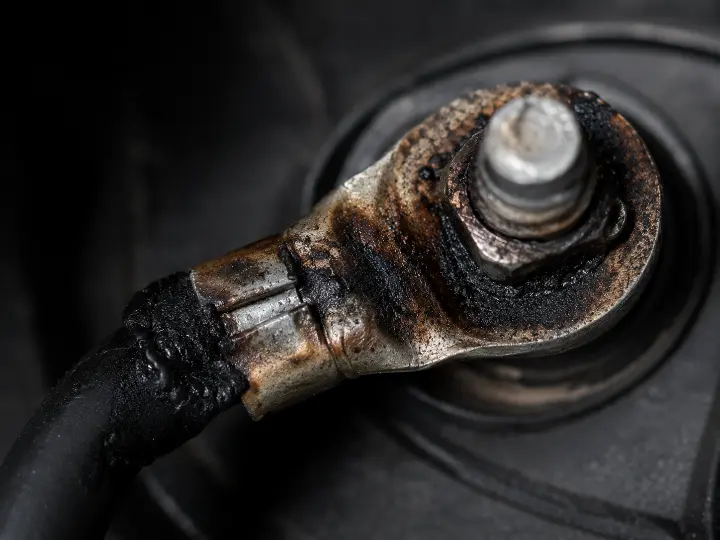
Any looseness at all when the lug is gently tested is a same-visit fix. Don't ignore it. A hot compressor terminal can go from warm to burned in a single season.
This is one of the more uncomfortable checks to perform, because it means working directly around a component carrying serious current. A rushed technician will tend to leave the cover on and move to the next unit.
It is also the connection where a delayed fix carries the highest stakes — a compressor takeout from terminal burn is one of the more expensive single-visit failures on a service contract, yet one of the most preventable.