
A maintenance contract is signed with a company. The maintenance itself is done by a person. When that person changes, something real is lost — even if the contract, the price, and the schedule stay the same.
A technician who has worked a property for two years knows things no written report captures. Which units run hot because of where they're mounted. Which one had a leak last year that might still be seeping. Which capacitor looked borderline last visit and is worth a second look. None of it is written down explicitly. They live in the technician's memory.
Lose the technician, lose the memory. The new one starts from the report — which rarely captures the small, unofficial observations that never became a line item. The new technician just doesn't know what the last one knew.
This matters most right after a handoff. A property with high turnover doesn't lose continuity once. It loses it repeatedly, and every loss resets the clock. A unit being quietly watched for a slow amperage drift can go three visits with a new technician before anyone notices the trend again.
Turnover changes incentives, too. A technician who expects to be on a property for years has a reason to flag a small problem early — they are the one who'll deal with it later. A technician who knows they'll likely be reassigned has less reason to dig. It is just how attention works when the consequences land on someone else.
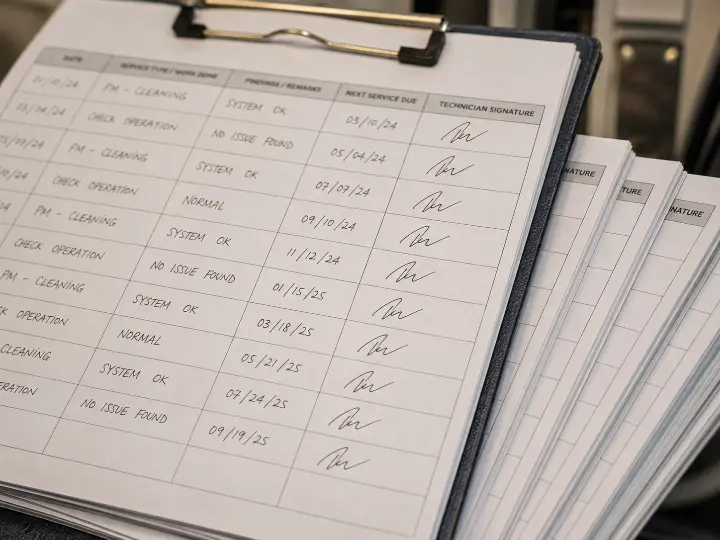
Technicians leave, get promoted, get reassigned. What's avoidable is losing the memory. A vendor relationship built only around price, frequency, and scope has no way to notice that the person doing the work just changed for the third time this year.
A vendor relationship must be transparent using data structure. The fix isn't loyalty to one technician. The fix is using data entry and storage that can be reviewed and traced back. These notes stay when the technician leaves. A vendor with a real answer such as data structure is protecting your asset life.