
A contactor is a simple device: a low-voltage signal from the thermostat energizes a coil, the coil pulls a set of contacts closed, and line voltage flows to the compressor and condenser fan. It does this every time the system cycles — often several thousand times in a single cooling season.
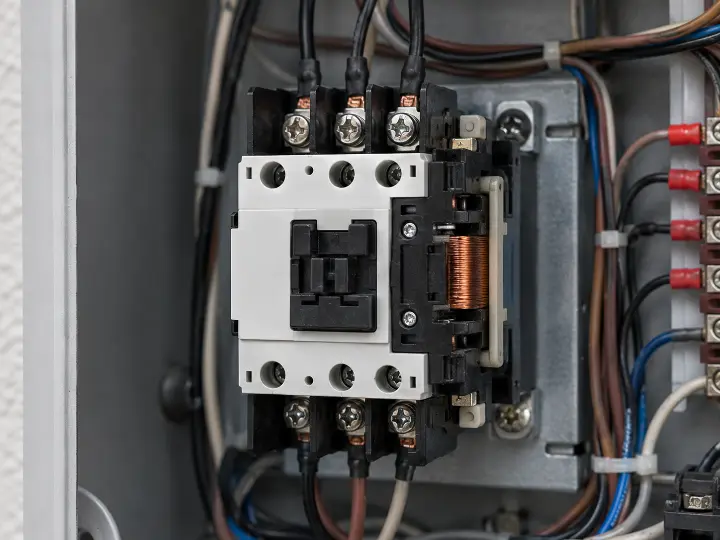
As the contacts close, there's a brief arc across the gap before they fully touch. That arcing erodes the contact surface, transferring metal from one contact to the other and leaving a rough, pitted surface instead of a smooth one.
The reduced surface contact area increases resistance right at the point where the highest current is. That resistance generates heat, which accelerates further pitting.
A badly pitted contactor fails one of two ways: no contact and welded together.
- the contacts pit enough that they stop making reliable contact and the compressor gets intermittent or no power
- the contacts weld together from the heat and the compressor is always on. This is the more dangerous scenario.
The visual check: contacts should look silver-gray and relatively flat. Fine black pitting, a rough or cratered surface, or visible discoloration on the contact face all mean the contactor is on a countdown, even though the unit is running normally today.
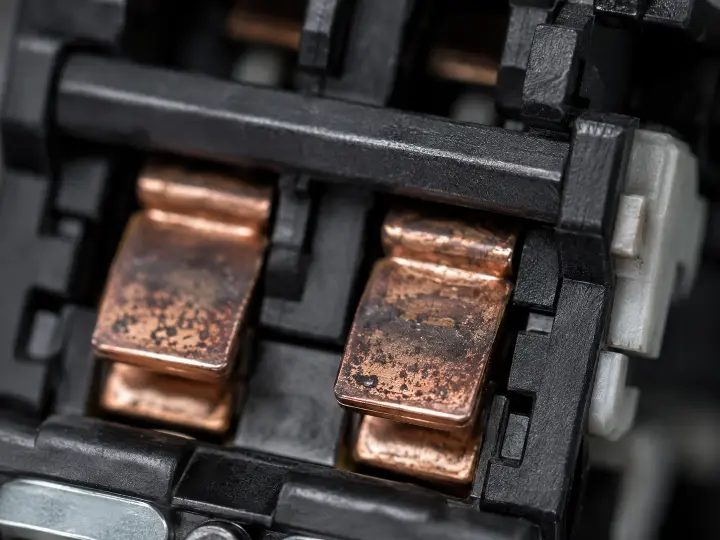
From outside the panel, everything looks operational. Confirming its actual condition means opening the panel and looking directly at the contact surface, not just listening for the click.
Ask your technician whether they physically inspected the contact surface, not just confirmed the contactor engages.